
Equipment Purchase with construction equipment leasing in california
Construction Equipment Leasing in CaliforniaEquipment Financing & Leasing: Everything Small Business Owners Need to Know
Whether you’re buying your first piece of equipment or expanding an established operation, how you pay for equipment matters as much as what you buy. This guide breaks down equipment financing and leasing from a small business perspective — no jargon, no sales pitch, just the information you need to make smart decisions. It’s best to not use working capital for fixed asset especially, purchasing heavy equipment and machinery with construction equipment leasing in california, which allows you to spread you dollar further with inflation buster cashflow management move.
We’ll cover what equipment financing actually is, the 7 key benefits of leasing, how to qualify, what to watch out for, and how to choose the right structure for your business.
📘 What Is Equipment Financing?
Equipment financing is a way to acquire business equipment without paying the full cost upfront. Instead of draining your cash reserves or tying up your credit lines, you make manageable monthly payments while using the equipment to generate revenue. Credit requirement for construction equipment leasing in california can vary depending on the age of the equipment, type of equipment, credit (FICO) and time in business with business credit history.Besides the basic requirements, there are affordability, comparable debt and debt service aspect of the financing consideration. You can have 800 FICO but if you can’ta fford it, credit score don’t pay the bill. It allows you to borrow from peter to pay paul. Debt don’t go away. With leasing, it’s easy to have equity once it’s paid off while taking advantage of tax benefits.
The Basic Concept
Think of it like a car loan, but for business equipment. A lender provides funds to purchase equipment, and you pay it back over time with interest. The equipment itself typically serves as collateral, which means:
- Lower rates than unsecured business loans
- Easier approval (equipment backs the deal)
- Longer terms = lower monthly payments
- Equipment pays for itself through use
Why It Matters for Small Business
For most small businesses, equipment is essential but expensive. Financing lets you:
- Preserve cash for operations, payroll, emergencies
- Stay competitive with better/newer equipment
- Scale faster without waiting to save up
- Match payments to revenue the equipment generates
- Take tax deductions (Section 179, depreciation)
🏆 The 7 Benefits of Equipment Leasing
Whether you’re considering a lease, an equipment finance agreement, or paying cash, understanding these seven benefits will help you make the right decision for your business:
1️⃣ Preserve Working Capital
Cash is the lifeblood of any small business. When you finance equipment instead of paying cash, you keep that money available for payroll, inventory, marketing, emergencies, and opportunities. A business with $50,000 in the bank and $800/month equipment payments is in a much stronger position than one with $0 in the bank and a fully-owned machine.
Real-world example: A restaurant owner finances a $40,000 commercial oven instead of paying cash. Six months later, the refrigeration system fails. Because they preserved cash, they can handle the emergency without taking expensive short-term debt.
2️⃣ Fixed Monthly Payments = Predictable Budgeting
Unlike variable costs that fluctuate with sales, equipment lease payments are fixed for the entire term. You know exactly what you’ll pay every month for 24, 36, 48, or 60 months. This makes cash flow forecasting simple and eliminates surprises.
Why it matters: Fixed payments let you price your services accurately, plan for growth, and sleep better at night knowing your obligations are predictable.
3️⃣ Tax Advantages (Section 179 & Depreciation)
Equipment financing comes with significant tax benefits. Under Section 179, you may be able to deduct the full purchase price of financed equipment in the year you acquire it — even though you’re paying it off over time. For 2024, the deduction limit is over $1.16 million.
- Section 179: Immediate deduction of equipment cost
- Bonus Depreciation: Additional first-year deduction
- Lease Payments: Often 100% deductible as business expense
4️⃣ Hedge Against Obsolescence
Technology changes fast. Equipment that’s cutting-edge today may be outdated in 3-5 years. With certain lease structures (like FMV leases), you can return equipment at the end of the term and upgrade to newer models — rather than being stuck with aging assets you paid full price for.
Industries where this matters most: Medical/dental equipment, technology, manufacturing, printing, and any field where equipment capabilities evolve rapidly.
5️⃣ Easier Qualification Than Traditional Loans
Because the equipment itself serves as collateral, equipment financing is often easier to qualify for than unsecured business loans or lines of credit. Lenders have security — if you default, they can repossess the equipment. This means:
- Lower credit score requirements (often 600+ vs. 680+ for bank loans)
- Startups can qualify with structure (down payment, co-signer)
- Less documentation required (app-only up to $250K)
- Faster approvals (24-48 hours vs. weeks for bank loans)
6️⃣ Equipment Pays for Itself
The best equipment financing scenarios are where the equipment generates more revenue than the payment costs. A $50,000 CNC machine with a $1,200/month payment that produces $8,000/month in billable work is essentially paying for itself six times over.
The math that matters: If monthly equipment payment < monthly revenue generated, financing makes sense. You’re using leverage to grow — the same principle that makes real estate investing work.
7️⃣ Preserve Credit Lines for Other Needs
Using your bank line of credit or business credit cards to buy equipment ties up borrowing capacity you might need later. Equipment financing is a separate credit facility — it doesn’t touch your existing lines. This keeps your powder dry for inventory, payroll gaps, or unexpected opportunities.
Strategic thinking: The best-capitalized businesses use different financing tools for different purposes. Equipment financing for equipment. Lines of credit for working capital. Term loans for expansion. Each tool has its place.
📊 Types of Equipment Financing
Not all equipment financing is the same. Here are the main structures and when each makes sense:
🏦 Equipment Finance Agreement (EFA)
You own it from day one. This is essentially a loan to purchase equipment. You make payments, and at the end, the equipment is yours — no buyout required.
- Best for: Equipment you’ll use long-term
- Ownership: Yours from the start
- Tax treatment: You depreciate it as owner
- End of term: Nothing — you already own it
📄 $1 Buyout Lease (Capital Lease)
Lease structure, ownership intent. You make lease payments, and at the end, you purchase the equipment for $1. Functionally similar to EFA but structured as a lease.
- Best for: Equipment you want to own
- Ownership: Yours at end for $1
- Tax treatment: Often treated as purchase
- End of term: Pay $1, own equipment
🔄 FMV Lease (Fair Market Value)
Lower payments, flexibility at end. Payments are lower because you’re not financing full ownership. At term end, you can buy at fair market value, return, or renew.
- Best for: Tech/equipment that may become obsolete
- Ownership: Option to buy at FMV
- Tax treatment: Payments often 100% deductible
- End of term: Buy, return, or renew
📅 Deferred/Seasonal Payments
Payments structured around your cash flow. Skip payments during slow months, or defer first payment 90 days while equipment ramps up revenue.
- Best for: Seasonal businesses
- Ownership: Depends on base structure
- Tax treatment: Same as underlying type
- Examples: Landscaping, construction, tourism
📊 Quick Comparison
⚖️ Lease vs. Buy vs. Finance: When to Use Each
There’s no universally “right” answer — it depends on your situation. Here’s a framework:
Pay Cash When…
- You have excess cash earning nothing
- Equipment is low-cost (<$10K)
- No better use for the capital
- You want simplicity over optimization
- Strong cash position with 6+ months reserve
Finance/EFA When…
- You want to own the equipment
- Equipment has long useful life (7+ years)
- You want Section 179 deduction as owner
- You’ll use it until it wears out
- Resale value matters to you
Lease (FMV) When…
- Technology changes rapidly
- Lower monthly payment is priority
- You may want to upgrade mid-term
- Uncertain if you’ll need it long-term
- Off-balance-sheet treatment matters
🔧 What Equipment Can Be Financed?
Almost any business equipment that has tangible value and a useful life. Here’s a partial list:
🚛 Transportation
- Commercial trucks & trailers
- Dump trucks
- Box trucks & vans
- Fleet vehicles
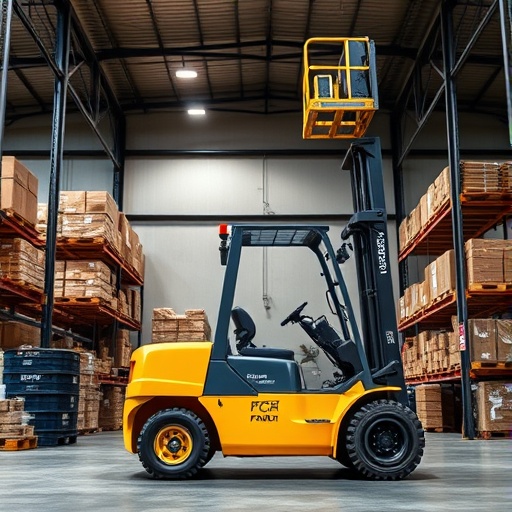
- Forklifts
- Buses & shuttles
🏗️ Construction
- Excavators & bulldozers
- Cranes & lifts
- Concrete equipment
- Scaffolding systems
- Compressors & generators
- Paving equipment
🏭 Manufacturing
- CNC machines
- Lathes & mills
- Packaging equipment
- Assembly lines
- Welding equipment
- 3D printers (industrial)
🏥 Medical/Dental
- Imaging (MRI, CT, X-ray)
- Dental chairs & equipment
- Surgical equipment
- Lab equipment
- Patient monitoring
- Sterilization systems
🍽️ Restaurant/Food
- Commercial ovens & ranges
- Walk-in coolers/freezers
- POS systems
- Food trucks
- Beverage equipment
- Dishwashers
💻 Technology/Office
- Servers & networking
- Phone systems
- Copiers & printers
- Security systems
- Software (bundled)
- AV equipment
✅ How to Qualify for Equipment Financing
Equipment financing is more accessible than most business loans. Here’s what lenders look for:
Established Businesses (24+ Months)
- Credit Score: 600+ preferred (650+ for best rates)
- Time in Business: 24+ months
- Revenue: Sufficient to support payments
- Down Payment: $0 down available for strong profiles
- Documentation: App-only up to $250K (no tax returns)
Approval odds: High — this is the sweet spot for equipment financing.
Startups & New Businesses (<24 Months)
- Credit Score: 650+ personal credit
- Time in Business: Startup OK with structure
- Down Payment: 10-20% typically required
- Industry Experience: Prior experience helps
- Documentation: More extensive review
Approval odds: Good with right structure (down payment, industry experience).
📊 Credit Tier Guidelines
📋 The Equipment Financing Process
From application to funding, here’s what to expect:
Application (5 Minutes)
Complete a simple application with basic business info: business name, time in business, equipment description, amount needed. No hard credit pull at this stage.
Credit Review & Approval (24-48 Hours)
We review your application, pull credit (soft pull first if available), and provide approval terms. For app-only deals under $250K, this can happen same-day.
Documentation & Vendor Coordination
Sign financing documents, provide vendor invoice or purchase order. We coordinate directly with your equipment vendor/dealer on payment.
Funding & Equipment Delivery
We pay the vendor directly. Equipment ships to you. First payment typically due 30 days after funding (or deferred if arranged).
💰 Tax Benefits: Section 179 & Depreciation
One of the biggest advantages of equipment financing is the tax treatment. Here’s what you need to know:
📜 Section 179 Deduction
Section 179 allows you to deduct the full purchase price of qualifying equipment in the year you put it into service — even if you’re financing it.
- 2024 Limit: $1,160,000
- Phase-out threshold: $2,890,000
- Applies to: New and used equipment
- Financing OK: You can deduct even if financed
📊 Bonus Depreciation
In addition to Section 179, bonus depreciation allows additional first-year deductions:
- 2024: 60% bonus depreciation
- 2025: 40% bonus depreciation
- 2026: 20% bonus depreciation
- Can combine: With Section 179 for larger deductions
📊 Example: $100,000 Equipment Purchase
You finance $100,000 in equipment with 24% effective tax rate:
- Section 179 deduction: $100,000
- Tax savings: $100,000 × 24% = $24,000
- Net effective cost: $76,000 (before financing costs)
You get the full tax benefit in Year 1, but pay for the equipment over 3-5 years. This is a significant cash flow advantage.
⚠️ What to Avoid in Equipment Financing
Not all financing is created equal. Watch out for these pitfalls:
❌ Using MCA for Equipment
Merchant Cash Advances have 40-150%+ APR equivalents and 6-12 month terms. Using MCA to buy equipment that lasts 10 years is financial suicide. Use proper equipment financing with 5-7 year terms instead.
❌ Balloon Payments You Can’t Afford
Some leases have large balloon payments at the end. Make sure you understand and can handle the end-of-term obligation before signing.
❌ Prepayment Penalties
Some contracts lock you in for the full term with no prepayment option. Understand the early payoff terms before committing.
❌ Unlicensed Brokers
Work with licensed, reputable lenders. Ask for NMLS numbers and state licensing. Unlicensed brokers may not have your best interests in mind.
❓ Frequently Asked Questions
What credit score do I need for equipment financing?
Can startups get equipment financing?
How long does approval take?
Do you finance used equipment?
What’s the difference between a lease and a loan?
Can I include soft costs (installation, training) in the financing?
What if I want to pay off early?
Is there a minimum or maximum financing amount?
🚀 Ready to Get Started?
Complete the form below to check your qualification and get a quote. No obligation, no hard credit pull until you’re ready to move forward.
Prefer to talk? Call 888-511-6223 — we answer the phone.
🏆 Why Small Business Owners Choose Liberty Capital
- ✓ Financing equipment since 2003
- ✓ Licensed: NMLS #2009539
- ✓ CA DFPI: 60-DBO49692
- ✓ $10K to $5M+ equipment financing
- ✓ New and used equipment from any source
- ✓ Startup programs available
- ✓ Transparent terms, no hidden fees
- ✓ Real people, real answers
We’re not just equipment lenders — we’re business owners helping business owners. We’ll give you straight talk about what makes sense for your situation, even if that means telling you to pay cash or wait.