A seasonal business can look exceptionally strong for four months of the year and quiet for the other eight. That pattern creates a reasonable question: do lenders fund seasonal businesses? Yes, many do. The difference is that lenders must see how the business survives the off-season, repays capital through its revenue cycle, and uses funds to create a measurable return.
For a landscaping company, the need may hit before spring crews mobilize. For a retailer, it may arrive months before holiday inventory sells. For a marina, campground, pool service company, or event business, the capital requirement often comes well before customer deposits and peak receipts arrive. The right financing structure accounts for that timing instead of forcing a seasonal operation into a payment schedule built for a business with flat monthly sales.
Do Lenders Fund Seasonal Businesses With Uneven Revenue?
They can, but approval is based on more than one strong season. A lender or funding provider generally wants to understand the complete operating cycle: when expenses start, when revenue arrives, how long the slow period lasts, and what cash reserves or recurring income support the business between peaks.
Seasonality itself is not automatically a negative. In fact, a predictable annual cycle can be easier to finance than a business with erratic revenue and no clear explanation. A company that has produced similar spring and summer results for several years, maintains organized financial records, and can document pre-booked work gives a funding source a clearer repayment story.
The challenge comes when a business applies after its cash has already been exhausted. At that point, the request may look like emergency financing rather than planned growth capital. Applying before the busy season gives more options and makes it easier to match the term, payment frequency, and funding amount to actual cash flow.
What Lenders Look for Beyond Monthly Deposits
Traditional banks often focus heavily on annual financial statements, tax returns, personal credit, debt service coverage, and collateral. Alternative lenders may place more weight on recent bank activity, gross deposits, time in business, equipment value, invoices, or the strength of the upcoming season. Neither approach is universally better. The right choice depends on the business’s records, timeline, credit profile, and purpose for the capital.
A strong seasonal funding request answers practical questions before the underwriter has to ask them. What caused last year’s revenue peak? Is demand booked, recurring, or dependent on weather? How much working capital is needed before sales begin? What fixed costs continue in the off-season? And if the season starts later than expected, is there enough liquidity to keep payments current?
Revenue history matters, but context matters just as much. A snow removal company can show little summer activity without raising concern if its winter deposits have been consistent. A seasonal restaurant may strengthen its file by showing reservation trends, location performance, vendor terms, and prior-year sales reports. A contractor with a concentrated busy period may demonstrate signed contracts and a reliable accounts receivable pipeline.
Match the Funding Product to the Season
The mistake is not using financing. The mistake is using short-term, high-frequency repayment capital for a long lead-time need when no near-term receipts exist to support it. Payment pressure can erase the benefit of the funds before the season begins.
Equipment Dealers & VendorsOffer Financing On the SpotFree Vendor Package: program guide, credit guidelines & customer credit app. Close more sales, earn referral fees.Download Free →A revolving line of credit can make sense for recurring gaps in payroll, supplies, fuel, and operating expenses. The business draws what it needs, repays as receivables or sales come in, and may reuse the line during the next cycle. Qualification tends to be stronger when the owner can show a history of responsible use and a clear paydown plan.
A term loan may be appropriate for a defined purchase with a useful life beyond one season, such as renovations, technology, build-out costs, or a strategic inventory buy. The key is selecting a term that leaves the business room to operate. A loan that is technically approved but produces an unmanageable payment during the slowest month is not a good financing match.
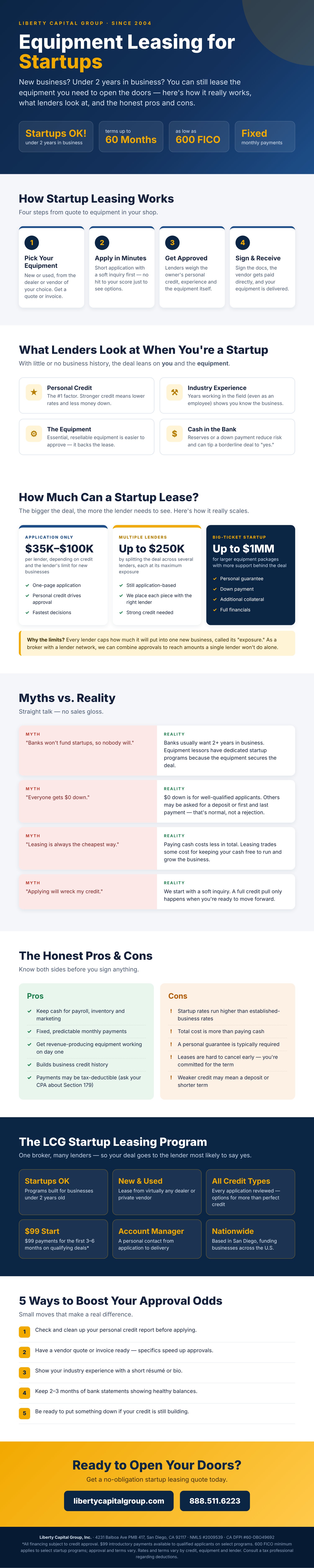
Equipment financing and leasing can be especially useful when the purchase itself will generate revenue or improve capacity. A landscaping business adding mowers, a rental company acquiring units, or a hospitality operation upgrading essential equipment may preserve working capital by financing the asset separately. The equipment often helps support the transaction, and the repayment term can be aligned with its expected use. This is different from using general working capital to pay cash for an asset and then finding the operating account too thin for payroll or inventory.
Invoice factoring may fit seasonal businesses that bill commercial customers and wait 30, 60, or 90 days to be paid. Instead of allowing completed work to sit in receivables, the business can access a portion of invoice value sooner. This can be valuable when a profitable busy season creates a larger-than-usual gap between performing work and collecting cash.
Merchant cash advances and similar revenue-based options can provide speed and flexibility for some businesses with steady card sales or deposits. They should be evaluated carefully, especially before a slow period. The total payback, daily or weekly withdrawal, and impact on operating cash need to be understood in dollars, not just in terms of how quickly funding can be delivered.
Build a Case Before the Peak Season Starts
Seasonal operators are often busy serving customers when they should be planning for the next cycle. A better approach is to begin the financing conversation well before inventory orders, staffing commitments, insurance renewals, or equipment repairs create pressure.
Prepare recent business bank statements, prior-year tax returns and financial statements when available, a current debt schedule, and a simple projection of the coming season. The projection does not need to be complicated. It should show expected monthly sales, major expenses, existing debt payments, and when the requested capital will be deployed and repaid.
For businesses with contracts, reservations, purchase orders, repeat customer data, or signed proposals, those documents can strengthen the file. They do not guarantee approval, but they help show that the projected season is based on real demand rather than optimism.
It also helps to separate growth spending from cash-flow repair. Buying inventory at a discount ahead of a proven selling season is a specific use of funds. Covering accumulated losses without a plan to change operations is a different risk profile. Funding advisors and lenders can structure the first situation more confidently when the numbers support it.
Cash Flow Planning Is the Real Approval Advantage
From an owner’s perspective, the question is not simply whether capital is available. It is whether the payment structure leaves enough cash to operate, react to weather changes, pay vendors, and take advantage of a strong season. A lower payment with a longer term may protect cash flow, but it can cost more over time. Faster repayment can reduce total financing expense, but only if the seasonal revenue can handle it.
This is why comparing more than one offer matters. Look beyond the approved amount. Review payment frequency, total cost, prepayment terms, lien requirements, personal guarantee exposure, collateral, and whether the product can be renewed or expanded after a successful season. A funding option that appears fast may be expensive if it forces payments before your revenue arrives.
A practical financing partner should ask these questions upfront and help identify the structure that fits the business rather than pushing a one-size-fits-all product. Liberty Capital Group works with business owners to compare funding paths based on real operating conditions, including seasonal revenue patterns, equipment needs, and the urgency of the request.
When Seasonal Financing Is Most Likely to Work
Seasonal businesses generally have the best financing options when they can show a predictable operating history, a reasonable purpose for the funds, and enough visibility into the coming season to support repayment. Businesses with weaker credit or limited collateral may still have options, but pricing, terms, and documentation requirements can change.
The most effective move is to plan before the busy period, not after it has already begun. A well-timed capital request can buy inventory at the right time, keep skilled staff in place, repair critical equipment, and prevent a temporary cash gap from becoming a missed revenue opportunity.
If your next season requires capital, request a payment quote early and review the numbers with the same discipline you apply to pricing jobs or buying inventory. The right funding should support the season ahead, not become another obstacle to managing it.