
Liberty Capital
Restaurant Working Capital in Vermont
How to get restaurant working capital in vermont — and fund every stage from opening day to exit. Add capacity and win bigger jobs with equipment leasing, SBA 7(a) & 504 loans, business lines of credit, working capital loans, revenue-based financing, and MCA restructuring—without draining cash. We align payments to your revenue cycle, seasonality, and insurance receivables.
Table of Contents
- The 5-Stage Lifecycle
- Stage 1 — Startup & Pre-Opening
- Stage 2 — Survival & Stabilization
- Stage 3 — Growth & Expansion
- Stage 4 — Scale & Strategic Structure
- Franchise, Private, or Public?
- Equity vs. Debt
- What Is Your Restaurant Worth?
- Exit Strategies
- Compare Financing Options
- Promotions & Programs
- Why Operators Choose Liberty
- Restaurant Financing FAQ
- What Do I Need to Apply?
- Online Application
The Restaurant Capital Journey — 5 Stages Every Owner Faces
Every stage demands a different capital strategy. Most owners only plan for Stage 1.
🌱 Stage 1 · Startup & Pre-Opening
Months 0–6. Build-out, equipment, pre-opening ops, working capital reserve.
⚡ Stage 2 · Survival & Stabilization
Months 6–24. Break-even fight, prime cost control, emergency cash access.
📈 Stage 3 · Growth & Expansion
Year 2–5. Second location, new revenue streams, EBITDA building.
🏛 Stage 4 · Scale & Strategic Structure
Year 4–10. Multi-unit company, sale-leaseback, equity partners.
🚪 Stage 5 · Maturity & Exit
Year 7+. Valuation optimization, exit planning, strategic sale.
Reality check: The restaurants that succeed long-term aren’t the ones that avoid borrowing — they’re the ones that borrow strategically at the right stage for the right reason.
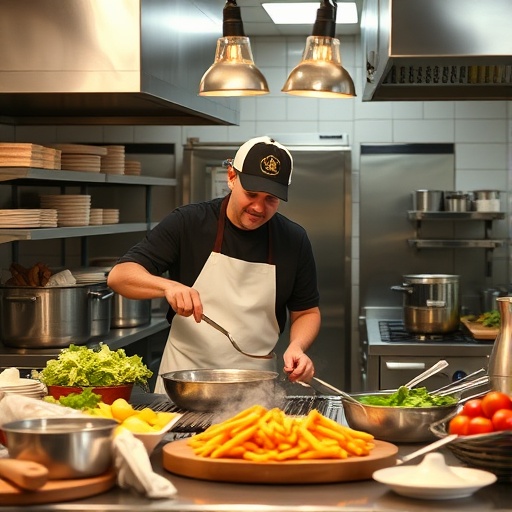
Stage 1 — Startup & Pre-Opening: You Need More Money Than You Think
The single most common reason a restaurant fails in year one isn’t bad food or bad location. It’s launching undercapitalized and running out of cash before the concept finds its audience. Most first-time owners underestimate startup costs by 30–50% and bring zero operating reserve to the table.
The real number for a full-service restaurant in vermont is $375,000–$750,000 depending on concept and build-out. Fast casual: $150,000–$350,000. Ghost kitchens: $50,000–$120,000 — the most capital-efficient entry point in the industry today.
The real rule: Whatever you budgeted for startup costs, add 25%. Whatever you planned for working capital reserves, double it. Months 2–12 before break-even will cost every dollar you have and then some.
The pre-opening capital stack has four layers most first-timers conflate into one number:
- Build-out & TI: Construction, permitting, electrical, hood systems. Negotiate your TI allowance hard — $50/sq ft on 2,000 sq ft = $100,000 you don’t need to borrow.
- Equipment: A $120,000 kitchen equipment purchase depletes working capital. An equipment lease spreads it over 48–60 months and keeps cash where you need it most.
- Pre-Opening Ops: Staff training, initial food inventory, marketing, permits. Budget 60–90 days of operating costs before your first customer.
- Working Capital Reserve: Minimum 6 months of projected fixed costs held in reserve before you open.
⚠ The trap: Owners spend the working capital reserve on build-out overruns, then open without a cushion. The first slow week wipes them out. They reach for an MCA — and often regret it.
Best startup structure for vermont operators: Personal equity + SBA 7(a) or 504 for build and real property, equipment leasing for the kitchen, business line of credit for working capital.
LCG Insight: Equipment leasing is the most underutilized capital tool in restaurant startups. A $150,000 equipment lease preserves that same $150,000 as operating cash — the most critical resource in year one.
Stage 2 — Survival & Stabilization: The First Two Years Will Try to Break You
You’re open. Revenue is coming in. But the math doesn’t work yet — and that is normal for months 6 through 18. The restaurants that survive plan for it financially. The ones that don’t scramble for capital at the worst possible moment.
Working capital becomes the obsession. Food cost target: 28–32%. Labor cost target: 30–35%. Together they’re called Prime Cost — keep it below 62–65% of revenue and you have a chance. Above 70% is a structural crisis, not a capital problem.
The working capital loop: You pay vendors in 15–30 days but collect daily. This seems favorable — until a broken refrigerator or bad month hits. A $20,000 emergency in month 8 can cascade into a death spiral without fast capital access.
A business line of credit is the gold standard here: draw what you need, repay when revenue allows. Establish it before you need it — lenders extend lines to restaurants that don’t need them. The moment you desperately need one, approval gets harder.
⚠ The MCA Trap: MCAs cost the equivalent of 40–150% APR and pull from daily receipts, reducing cash flow and pushing you toward another advance. Three or more stacked MCAs is a structural crisis. Stop and restructure before it’s fatal.
This phase ends when you consistently clear break-even and build a 3-month cash cushion — typically month 12 to 24 for vermont operators.
Stage 3 — Growth & Expansion: Now You Know It Works. Do You Double Down?
The concept works. You have a loyal customer base and the P&L is encouraging. This is the most dangerous moment — not because of failure risk, but because of the temptation to expand before you’re operationally ready.
Before borrowing to grow, answer these honestly: Do you have 6 months of operating capital for the existing location? Do you have documented systems that can be replicated without you on every shift? Do you have a real GM — not just a great server — who can run location one while you build location two?
Expansion without systems is scaling your problems. The restaurant that runs on the owner’s personality cannot survive a second location. Training manuals, vendor relationships, scheduling — these must exist on paper before you replicate.
When those answers are yes, SBA 7(a) loans up to $5M become accessible with 2 years of P&L history. Equipment leasing for a second kitchen buildout preserves working capital to weather the new location’s first six months.
Adding revenue streams to your existing location — catering, ghost kitchen, retail products — is almost always the highest-ROI capital deployment in Stage 3. Fixed costs are already covered; every incremental dollar above food and labor flows to EBITDA.
The EBITDA threshold: At $250,000–$500,000 EBITDA from a single concept, you have an asset that can raise equity, attract partners, and command a real valuation multiple.
Stage 4 — Scale & Strategic Structure: 3–10 Locations. A Real Business. Now What?
At 3 locations you are no longer running a restaurant — you are running a restaurant company. A single-unit owner is an operator. A multi-unit owner is an investor and executive. The skills, capital tools, and strategic options are completely different.
The defining question: Are you building to own, building to franchise, or building to sell? These are incompatible operating postures and confusing them is expensive.
Building to Own
Optimize for cash flow and quality of life. Capital tools: conventional bank loans, SBA, equipment leasing, LOC. Exit: private sale at 3–4× EBITDA.
Building to Scale
Accept lower near-term margins for geographic expansion and brand equity. Capital tools: equity partners, growth-stage debt, sale-leaseback. Exit: strategic buyer or PE at 5–8× EBITDA.
Sale-Leaseback: If you own real estate under any location, a sale-leaseback converts illiquid equity into working capital while you retain operational control. This can unlock $500,000–$3M+ per property for new unit development — one of the most underused capital tools in multi-unit restaurant finance in vermont.
Minority Equity Partners: At $1M+ EBITDA, private equity and family offices take interest. A minority partner who brings capital, expertise, and eventually an exit path can be transformative — but dilution is permanent.
Franchise, Stay Private, or Go Public? The Three Paths at Scale
The honest capital calculus of each path available to vermont restaurant operators.
🔑 Franchise Your Concept
License your brand and systems to franchisees who fund their own units. Collect royalties (4–8% of revenue) and franchise fees ($25K–$50K per unit). Capital-light growth — but fewer than 20% of concepts that try to franchise achieve meaningful unit growth. Systems must be bulletproof before you sell them.
⚠ Right for 1 in 5 concepts
🏢 Stay Private + PE Partnership
A PE firm acquires a minority or majority stake for growth capital. Retain meaningful equity and participate in a larger exit 5–7 years later. The bar: $1M+ EBITDA, proven unit economics, scalable brand.
✓ Most common scale path
📊 Go Public (IPO / SPAC)
Requires $10M+ EBITDA, national brand presence, and institutional investors already on the cap table. For 99% of operators, this is not realistic. Shake Shack and Dutch Bros are the exception, not the model.
✗ Realistic for <1% of operators
🤝 Strategic Acquisition Target
Build to be acquired by a larger restaurant group or hospitality company. Strategic acquirers pay 5–8× EBITDA — above a financial buyer’s 3–4× — because they’re buying synergies, not just cash flows. Often the highest-value exit for a regional brand.
✓ Often the highest-value exit
Equity vs. Debt — Using the Right Tool at the Right Stage
Debt and equity are tools for different jobs. Using the wrong one at the wrong stage is one of the costliest mistakes in restaurant finance.
Use Debt When
- You have predictable recurring revenue
- You have identifiable assets to secure against
- The return on borrowed capital exceeds its cost
- You want to retain full ownership
Use Equity When
- Debt capacity is exhausted
- Growth phase with no cash returns for 3+ years
- You want a partner with strategic value beyond capital
- You’re preparing for a large institutional exit
The dilution math: Give up 30% for $2M at a $6.67M valuation. Sell for $12M — your 70% stake = $8.4M. Instead borrow $2M at 9% over 5 years: ~$1.1M in interest, but you own 100% of the $12M exit = $12M. Equity is expensive. It should be the last tool, not the first.
| Equity Type | Range | Typical Stake |
|---|---|---|
| Friends & Family | $10K – $250K | 5–25% |
| Angel Investor | $50K – $500K | 10–25% |
| Family Office | $500K – $5M | 20–40% |
| Private Equity | $5M – $50M+ | Majority |
| Strategic Partner | Negotiated | Varies |
What Is Your Restaurant Actually Worth? EBITDA Multiples by Stage
Valuation determines every strategic option available to you. Know yours at all times.
| Business Type | EBITDA Multiple | Who’s Buying | What Drives the Number |
|---|---|---|---|
| Single Unit / Micro | 1.5–2.5× | Another operator | Lease rights, equipment value |
| Established Single / Strong Brand | 2.5–4× | SBA-financed buyer | 3–5yr track record, local brand equity |
| Multi-Unit Regional | 4–6× | PE-fundable, strategic buyers | Documented systems, scalable brand |
| Platform / Franchise System | 6–10× | National strategic acquirers | 10+ units, active franchise, institutional-grade |
⚠ What destroys your multiple: Owner dependence. No documented systems. Lease expiring in under 24 months. Undisclosed MCA stack. Revenue in one daypart only. Fix these before you go to market — each one is a buyer’s negotiating weapon.
What increases your multiple: A GM who survives your absence. Multiple revenue streams. Long lease with renewal options. Clean 3-year books matching your tax returns. Proprietary product or IP a buyer couldn’t replicate.
Exit Strategies — Plan 3–5 Years in Advance or Leave Money on the Table
🤝 Operator-to-Operator Sale
Most common exit. Buyers are typically SBA-financed — clean books, positive EBITDA, real lease term required. Price: 2–4× EBITDA. Timeline: 6–18 months.
- ✓ Simpler process, motivated buyer, SBA facilitates
- ✗ Lowest multiple, limited buyer pool, slower close
🏦 Private Equity Sale
PE acquires majority control. Often partial — retain 20–40% equity and participate in a second larger exit 4–7 years later. Price: 4–7× EBITDA. Bar: $1M+ EBITDA.
- ✓ Higher multiple, two bites of the apple, scale resources
- ✗ Loss of control, PE timeline pressure, culture change
🏰 Strategic Acquisition
A larger group acquires your concept for brand equity, locations, or customer data. They pay above financial value for synergies. Price: 5–10× EBITDA or more. Often all-cash.
- ✓ Highest multiple, all-cash possible, brand legacy
- ✗ Concept may change, long process, needs M&A advisors
👨👩👧 Family / Management Buyout
Transition to family or management team via structured SBA buyout. Most tax-efficient in many cases. Price: 2–4× EBITDA, often below market. Preserves culture and staff.
- ✓ Legacy preserved, smoother transition, tax efficiency
- ✗ Below-market price, seller carry risk, family dynamics
Compare Financing Options for vermont Restaurant Operators
| Feature | Business Loans | Merchant Cash Advance | Equipment Financing | SBA 7(a) |
|---|---|---|---|---|
| Use Case | Working capital, payroll, marketing | Emergency cash, bridge funding | Kitchen gear, vehicles, POS, tech | Expansion, real estate, multi-unit |
| Payment Cadence | Monthly / Weekly | Daily / Weekly | Monthly (seasonal options) | Monthly |
| Credit Minimum | 600 | 500 | 650 | 680+ |
| Time in Business | 2+ years | 6+ months | Startup OK (strong profile) | 2+ years |
| Maximum Term | 24 months | 12 months | 60 months | 120 months |
| Application-Only | $150K | $250K | $250K | Financials required |
| Rates | Moderate | High (40–150% APR equivalent) | Lower (equipment-secured) | Lowest (government-backed) |
| Funding Time | Same day | Same day | 1–5 days | 30–90 days |
Reality check: If you’re buying equipment, equipment financing beats MCA on total cost and cash-flow fit every time. For expansion with a strong 2-year P&L, SBA 7(a) is almost always the right answer. Use MCA only when every cheaper option is off the table.
Promotions & Flexible Programs — Restaurant & Food Service Operators in vermont
- $99 for the first 12 months
- 90-Day Deferral (no payments first 3 months)
- Seasonal step payments aligned to revenue cycles
- 0% for 24 months with 20% buyout (select assets)
- Bundle kitchen equipment, POS, vehicles, soft costs under one payment
- App-only approvals to $250,000 (higher with financials)
- SBA 7(a) up to $5M for expansion and multi-unit development
- MCA restructuring and reverse consolidation available
Why Restaurant Operators in vermont Choose Liberty Capital Group
- 20+ years funding food service and hospitality
- App-only approvals up to $250,000
- Up to $5,000,000 with financials
- Next-day approval decisions
- 12–60 month fixed terms
- $0 down for qualified borrowers
- New & used equipment eligible
- No personal credit reporting
- No prepayment penalties
- MCA restructuring & reverse consolidation
- SBA-certified for expansion and acquisition financing
- We tell you the truth — even when it’s uncomfortable
Restaurant & Food Service Assets We Finance
Kitchen & Production Equipment
- Commercial ranges, ovens, fryers, grills, broilers
- Refrigeration: walk-in coolers, freezers, undercounter units
- Dishwashers, hood/ventilation systems, fire suppression
- Prep tables, slicers, mixers, food processors, blast chillers
- Bar equipment, espresso machines, draft systems
Technology & Operations
- POS systems, KDS, self-order kiosks, tableside payment
- Reservation, scheduling & labor management software
- Inventory management & purchasing platforms
- Online ordering integrations, catering management
- Security cameras, surveillance, access control
Vehicles & Delivery
- Food trucks, catering trailers, mobile kitchens
- Delivery vans, refrigerated vehicles
- Commissary equipment and ghost kitchen buildouts
Build-Out & Soft Costs
- FF&E packages (furniture, fixtures & equipment)
- Signage, branding, interior design
- Installation, training, software licensing
- Tenant improvement supplements
Restaurant Financing & Working Capital FAQ for vermont Operators
Can I bundle kitchen equipment, POS, and a vehicle into one payment?
Yes. We routinely bundle multi-vendor equipment packages — kitchen gear, tech, vehicles, and soft costs — into a single monthly payment under one approval.
Do you finance equipment for startup restaurants?
Yes, with a strong credit profile (600+), active business entity, and personal guarantee. Working capital and SBA products typically require 6–24 months in business.
What if I have existing MCA debt?
We offer MCA restructuring and reverse consolidation. Stop the daily drain and convert short-term, high-cost MCA positions into a single manageable payment. Contact us before stacking a third advance.
How does a seasonal payment plan work?
We can structure step-up/step-down payment schedules that match your high-revenue and slow seasons, reducing cash flow stress during off-peak months.
Can I include installation, training, and software in the financing?
Yes — soft costs including installation, training, software licensing, and upfits are eligible in most equipment financing programs. Bundle them with hardware under one approval.
What’s the difference between equipment financing and leasing?
Equipment financing (EFA) means you own the equipment and build equity with each payment, dollar-one deductible under Section 179 rules. Leasing (FMV or $1 buyout) offers lower monthly payments with end-of-term options to purchase, upgrade, or return. Consult your CPA on the tax treatment that fits your situation.
Does a restaurant ever stop needing financing?
The most successful operators never stop using financing strategically — they just shift from survival borrowing to strategic borrowing. The goal is to reach the point where you borrow by choice, not by necessity. That transition is the mark of a real restaurant entrepreneur.
What Do I Need to Apply?
- Online Application: Complete, upload, and authorize. Soft inquiry upfront; hard inquiry may occur at approval.
- Equipment Quotes / Invoices: Multiple vendors welcome — we’ll bundle them into one approval.
- 3–4 Months Bank Statements: To verify cash flow and establish ACH autopay.
- For SBA / Larger Loans: 2 years business and personal tax returns, current P&L, balance sheet, and lease agreement.
Online Application — Restaurant & Food Service Financing in vermont
Prefer to price it first? Get an instant quote.
Vendor & Dealer Financing Partnerships
Liberty Capital’s Vendor Financing Program helps restaurant equipment dealers, POS resellers, kitchen integrators, and foodservice distributors close more sales with in-house financing. Your customers get terms that fit their cash flow; you get paid upfront.
Benefits for Vendors
- Pre-approved offers to accelerate close
- Paid in full within 24–48 hours after funding
- Co-branded applications & instant decisions
- Dedicated account manager & vendor dashboard
- Multi-vendor bundling under one approval
Benefits for Operators
- Affordable payments on new and used equipment
- App-only to $250,000; larger with financials
- $0 down options for qualified credit
- Include install, upfits, software, and training
- Potential Section 179 advantages (consult CPA)