A profitable contract can still put a subcontractor in a cash crunch. Crews need to be paid every Friday, suppliers may require deposits before releasing materials, and a general contractor may not pay for 30, 60, or 90 days after work is billed. Subcontractor cash flow financing helps bridge that timing gap so a healthy project pipeline does not force the business to slow down.
The right funding is not simply the fastest money available. It should match the way your company earns revenue, the urgency of the expense, the strength of your receivables, and the profit left in the job after financing costs. A disciplined approach protects both your current contracts and your ability to bid on the next one.
Why subcontractor cash flow gets tight
Subcontractors often carry costs long before they receive payment. Mobilization, labor, fuel, insurance, rentals, permits, materials, and subcontracted trades can all hit the bank account early in a project. Even when a contract is well priced, retainage and progress-billing schedules can leave capital tied up for months.
Change orders create another pressure point. A change may add profitable work, but it can also require immediate labor and material spending while approval moves through several layers. Meanwhile, a large customer may have a strong payment record but a slow accounts-payable process. The business is not necessarily underperforming. Its cash conversion cycle is simply longer than its operating cycle.
That distinction matters. Financing should support a temporary timing gap, a defined growth opportunity, or a specific asset purchase. It should not be used repeatedly to cover losses caused by underbidding, uncontrolled job costs, or overdue tax obligations. Before seeking capital, review work in progress, expected collections, open commitments, and the true gross margin on each active project.
Subcontractor cash flow financing options to consider
There is no single best structure for every contractor. A company with reliable commercial receivables may benefit from a different solution than a firm that needs an excavator before a new project begins. The goal is to match repayment to the source of repayment.
Invoice factoring for slow-paying receivables
Invoice factoring converts eligible invoices into working capital before the customer pays. Instead of waiting through a long payment cycle, the subcontractor sells or advances against the receivable and receives a portion of the invoice value up front. Once the customer pays, the reserve is released less applicable fees.
This approach can make sense when invoices are owed by creditworthy general contractors, municipalities, or commercial customers and the primary issue is collection timing. It is particularly useful when growth creates larger receivables than the company can comfortably carry.
Factoring has trade-offs. The customer relationship, notice requirements, invoice verification, and fee structure deserve careful review. It is usually strongest when used against clear, completed, and properly documented billings, not disputed change orders or work that has not yet been accepted.
A business line of credit for recurring gaps
A revolving business line of credit can give a subcontractor flexibility for payroll, material purchases, seasonal slowdowns, and short-term operating needs. You draw only what is needed, repay it as customer payments arrive, and use the availability again when the next project requires it.
Equipment Dealers & VendorsOffer Financing On the SpotFree Vendor Package: program guide, credit guidelines & customer credit app. Close more sales, earn referral fees.Download Free →For established businesses with predictable revenue, a line can be less disruptive than arranging a separate financing transaction every time cash gets tight. Rates, draw fees, collateral requirements, personal guarantees, and renewal terms vary widely. A line should be sized around realistic peak needs, not merely the amount that feels comfortable to have available.
Working capital financing for immediate needs
Term-based working capital financing provides a lump sum that is repaid on a fixed schedule. It can help cover a defined expense such as a large supplier order, insurance renewal, project mobilization, or a short runway between completed work and incoming payments.
Speed can be valuable when a supplier discount or contract deadline is at stake. But repayment frequency matters. Daily or weekly payments can strain a contractor whose cash arrives in uneven monthly draws. Review the total payback, payment amount, term length, prepayment provisions, and whether the expected project cash flow can comfortably support the obligation.
Equipment financing instead of using operating cash
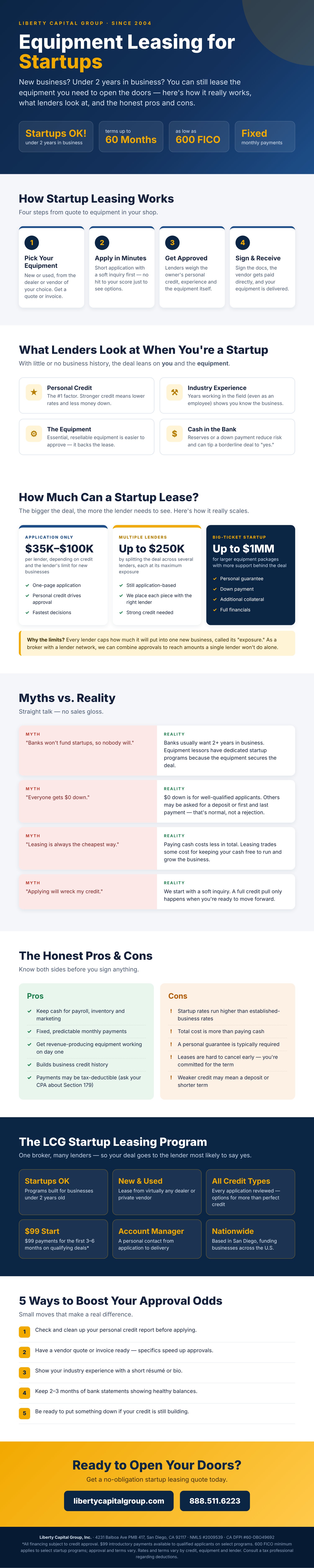
Buying essential equipment with operating cash can weaken a subcontractor just when new work requires more labor and materials. Equipment financing or leasing lets the asset help pay for itself over time while preserving working capital for the jobsite.
This can be a sound fit for vehicles, trailers, compact equipment, lifts, generators, specialty tools, and other revenue-producing assets. The equipment itself may serve as collateral, which can make the structure more practical than an unsecured option. Consider useful life, utilization, maintenance exposure, down payment, and whether ownership or leasing better fits the company’s tax and replacement strategy.
Purchase order and supplier financing in select situations
When a contract requires a sizable material order, financing tied to the purchase order or supplier relationship may be worth exploring. These programs are more specialized and usually depend on the customer, the transaction structure, the supplier, and the margin in the deal.
They are not a substitute for weak project controls. Still, when a solid order is in hand and the material cost is the obstacle, transaction-based financing can prevent a business from walking away from work it is qualified to perform.
Match the repayment schedule to the project cycle
A common financing mistake is accepting a short repayment schedule for a project that will not generate cash for several months. The capital may solve this week’s payroll issue while creating a larger problem next month.
Map the transaction against your actual timeline. Identify when materials must be paid for, when labor peaks, when the invoice can be issued, whether retainage applies, and when the customer historically pays. Then compare that timeline with the proposed payment schedule. A financing structure that looks affordable on an annual basis may still be wrong if payments begin before the project produces cash.
Also separate project cash from company-wide cash. A contractor with several active jobs may use collections from one project to support another. That can work, but it requires a clear weekly cash forecast. Track committed labor, supplier balances, debt payments, expected draws, and contingency reserves. A CFO mindset does not require a large finance department. It requires knowing what is due before it becomes urgent.
What lenders and funding providers may review
Most providers want evidence that the business can repay the financing from normal operations. Requirements differ by product, but underwriting commonly considers bank statements, time in business, revenue trends, outstanding obligations, credit profile, customer concentration, and the quality of open receivables.
For construction-related financing, organized documentation can improve both speed and options. Keep signed contracts, purchase orders, invoices, draw schedules, certificates of insurance, lien waiver records, and aging reports current. If a job has unusual payment terms, explain them early. Surprises late in underwriting often cost time.
A funding advisor can also help compare offers beyond the approval amount. Two offers with the same proceeds can have very different cash impact because of payment frequency, collateral requirements, total cost, and payoff flexibility. The best offer is the one that keeps the project moving without putting the business in a tighter position after funding.
Use financing to protect margin, not hide problems
Financing should give a subcontractor room to execute profitable work with confidence. It can help secure materials before prices rise, retain key employees, take on a larger contract, or avoid missing a payment because a customer’s check is late.
It cannot fix a contract with no margin. Before taking capital, confirm that the job budget accounts for labor burden, equipment wear, supervision, insurance, permits, financing cost, and retainage. If the numbers only work when every payment arrives perfectly, the project may need a different structure or a revised scope.
Liberty Capital Group helps business owners compare practical funding paths based on the job, the receivables, and the equipment needs behind the request. Bring a clear picture of your cash cycle and the opportunity in front of you. Then request a payment quote and choose financing that gives your company room to perform, collect, and grow.