A profitable contract can still create a cash-flow problem. Materials may need to be purchased this week, payroll is due Friday, and your customer may not release payment for 30, 60, or 90 days. The best financing options for subcontractors are built around that reality: they provide capital when work is moving forward, not only after the final draw is collected.
The right choice depends on what the funds will do for your business. Buying a skid steer requires a different structure than covering a labor gap between draws. A practical financing decision protects margin, preserves operating cash, and gives you enough capacity to take on the next profitable job without overextending the company.
Match Financing to the Job in Front of You
Subcontractors rarely have one simple capital need. A growing electrical contractor may need wire and panels for a large commercial build, while a concrete contractor may need to replace a truck or repair a piece of production equipment before the next pour. Financing works best when the repayment structure matches the useful life of what you are funding and the timing of your receivables.
Before applying, separate the need into one of three categories: working capital for short-term operating expenses, equipment capital for long-lived assets, or receivables funding for invoices that are already earned but not yet paid. That distinction can prevent a common and expensive mistake: using short-term financing to pay for an asset that will serve the business for years.
Business Lines of Credit for Recurring Cash Gaps
A business line of credit is often one of the most flexible options for subcontractors with regular but uneven cash flow. Rather than taking a full lump sum for every need, you draw funds as payroll, materials, deposits, insurance, fuel, or change-order costs arise. You typically pay interest only on the amount drawn, then replenish availability as receivables come in.
This can be a strong fit for contractors that have a predictable flow of jobs and need a cushion between billing cycles. The trade-off is that stronger credit, operating history, and bank activity can improve the terms available. It is also not a substitute for a weak job budget. A line of credit should bridge a timing gap, not quietly fund losses on underpriced work.
Working Capital Loans for Immediate Expenses
A working capital loan provides a set amount of funding with scheduled repayment. It can be useful when a subcontractor has a specific short-term need, such as mobilizing a crew, purchasing materials for an awarded project, catching up on vendor balances, or handling a seasonal slowdown.
The advantage is certainty. You know the funding amount and can build the payment into your cash forecast. The key is to compare payment frequency and total cost, not just the approval amount. Daily or weekly payments may work for a business with steady deposits, but they can put pressure on a subcontractor whose revenue arrives in larger milestone payments.
For contractors that need a broader range of structures, business loans and working capital programs can be matched to revenue patterns, time in business, credit profile, and the intended use of funds. The goal is not simply to get approved. It is to secure a payment that leaves enough room to operate the job correctly.
Equipment Dealers & VendorsOffer Financing On the SpotFree Vendor Package: program guide, credit guidelines & customer credit app. Close more sales, earn referral fees.Download Free →Equipment Financing Protects Operating Cash
Excavators, compact loaders, generators, trailers, lifts, welding equipment, and specialty tools can create more production capacity, but paying cash for them can drain the funds needed to run active projects. Equipment financing allows the asset itself to support the transaction, often with terms designed around its expected useful life.
This is usually a better approach than using a short-term working capital product to purchase equipment. If a machine will generate revenue over several years, spreading the cost over a similar period can preserve cash for materials, labor, and project contingencies.
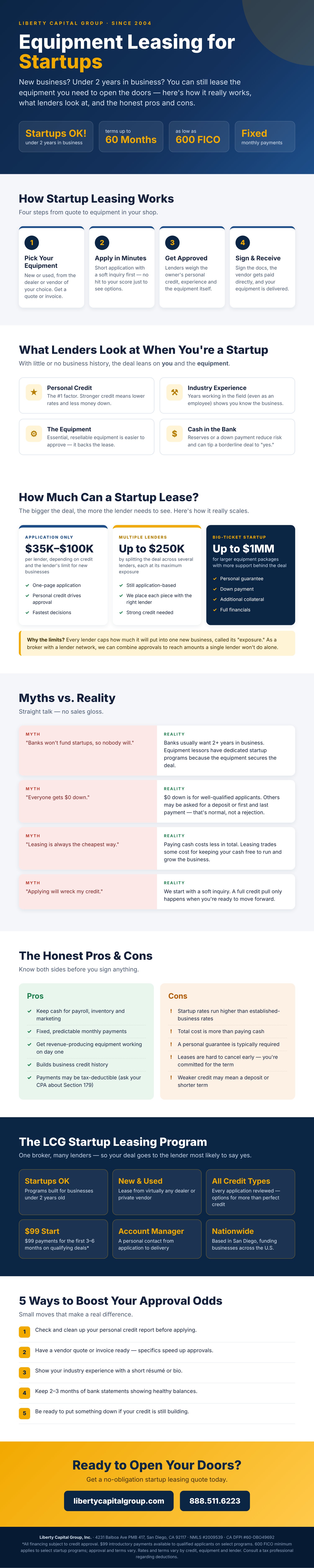
Equipment leasing may also be attractive when you need to conserve upfront capital, want a fixed payment, or plan to replace equipment on a regular cycle. The right structure depends on whether ownership at the end of the term matters, how quickly the equipment may become outdated, and whether the asset will retain meaningful resale value. A funding advisor can help compare loan and lease structures based on the equipment, tax strategy, and cash-flow priorities of the business.
Use Equipment Financing for Revenue-Producing Assets
The strongest equipment financing requests show a clear business purpose. Explain how the equipment will increase capacity, reduce rental expense, improve production speed, or allow your company to perform work that is currently subcontracted out. Lenders want to see that the payment is supported by the asset’s contribution to revenue, not just by optimism about future work.
Keep quotes, invoices, serial numbers when available, and recent bank statements organized. A clean package can help move a financing request faster, especially when equipment is needed to meet a project schedule.
Invoice Factoring Can Turn Receivables Into Cash
Slow-paying general contractors and commercial customers can make a healthy subcontractor look cash-poor on paper. Invoice factoring addresses this problem by advancing funds against eligible invoices. Instead of waiting for the customer’s payment cycle to end, you access a percentage of the invoice value sooner and receive the balance, less fees, when the customer pays.
Factoring is particularly useful when the customer has solid commercial credit but payment terms are stretching your operating cash. It can help cover payroll and supplier obligations without taking on a traditional installment payment that begins before the invoice is collected.
This option is not right for every invoice. The customer must generally be creditworthy, the work must be complete, and the invoice must be free of disputes or liens. Still, for subcontractors working with reliable commercial payers, receivables financing can turn completed work into capital for the next phase of growth.
Merchant Cash Advances Require Careful Payment Planning
A merchant cash advance can provide fast capital based on business revenue, often with more flexible approval standards than conventional financing. For a subcontractor facing an urgent repair, payroll shortage, or time-sensitive material opportunity, speed may be valuable.
However, this option deserves close scrutiny. Repayment is commonly tied to daily or weekly revenue activity, and the total cost can be higher than other forms of business financing. It may be appropriate when the return on the funds is immediate and clearly measurable, but it should not become the default answer to recurring cash-flow issues.
Before accepting any offer, review the total payback, payment frequency, expected impact on deposits, and whether the business can still cover payroll, vendors, taxes, and insurance during a slower month. Fast funding is useful only when the payment structure is sustainable.
How Subcontractors Improve Their Financing Position
Financing is easier to manage when the business can show a lender how money moves through a job. Maintain current financial statements, business bank records, accounts receivable aging reports, and copies of signed contracts or purchase orders. If your work involves retainage, progress billing, or long collection cycles, make that clear early in the process.
Also review job profitability before borrowing. Ask whether the project has enough gross margin to absorb financing cost, delays, change orders, and unexpected labor needs. Capital should help you deliver profitable work at a higher level, not allow a thin-margin contract to consume the company’s reserves.
At Liberty Capital Group, the financing process starts with the use of funds and the realities of your cash cycle. A subcontractor buying equipment, covering a temporary receivables gap, and preparing for a larger contract may need three very different solutions. Comparing options through that lens can lead to a more durable decision than taking the first approval offered.
The best financing option is the one that gives your crew what it needs to perform while leaving your business financially steady enough to win the next job. Request a payment quote and review the structure before a cash gap turns into a missed opportunity.