
If you are researching laundromat equipment leasing for a startup or existing business in 2026, this guide breaks down everything you need to know. Commercial laundry equipment carries a steep price tag, with a single 65-pound washer running around $15,000 and dryers adding another $7,000 to $8,000 each. For a hotel, nursing home, or apartment complex, outfitting a laundry room can demand $50,000 to $70,000 before the first load ever runs. Leasing offers a way around that capital barrier, but the landscape of providers, terms, and fine print is uneven. This article walks through real cost comparisons, qualification thresholds, contract details most guides skip, and how to pick a provider that matches your operation.
Table of Contents
- Why Lease Instead of Buy Laundromat Equipment?
- How Much Does Laundromat Equipment Leasing Cost? (2026 Pricing Breakdown)
- Who Can Qualify for Laundromat Equipment Leasing?
- Types of Equipment Available Through Leasing
- Lease Terms, Buyouts, and Contract Fine Print (What Most Guides Miss)
- Service Guarantees and Maintenance – What to Look For
- Tax Implications of Leasing vs. Buying Laundry Equipment
- How to Choose the Right Laundromat Equipment Leasing Provider
- Frequently Asked Questions About Laundromat Equipment Leasing
- Conclusion – Is Laundromat Equipment Leasing Right for You in 2026?
Why Lease Instead of Buy Laundromat Equipment?
Preserving cash flow sits at the top of the list for most business owners considering a lease. Writing a check for $50,000 or more to buy washers and dryers outright pulls capital away from leasehold improvements, marketing, staffing, and the working capital buffer every new or expanding laundromat needs. Leasing converts that lump sum into a predictable monthly line item, often in the range of $700 to $1,075 for $35,000 worth of equipment depending on your credit profile and business history.
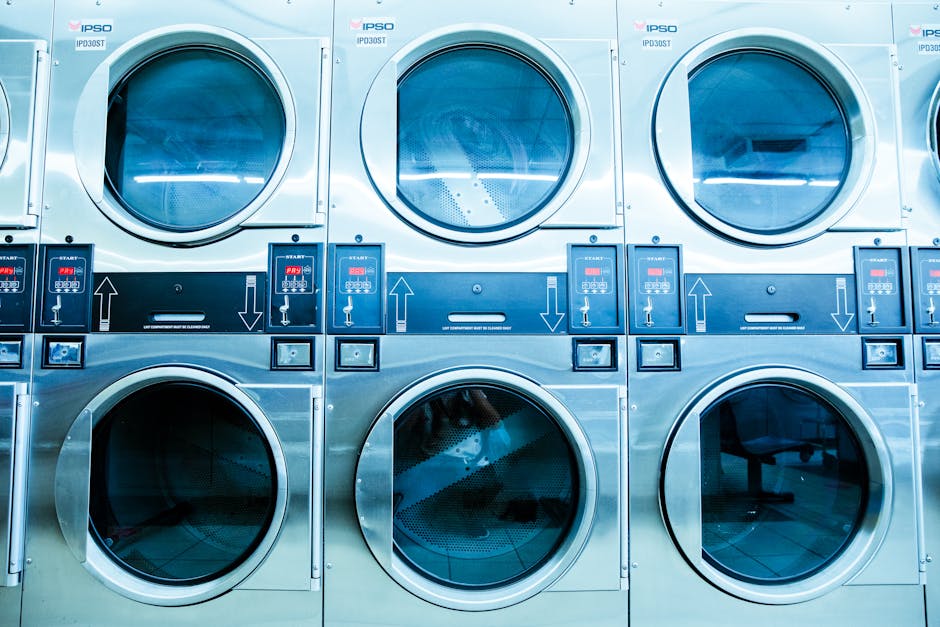
Predictable monthly expenses simplify budgeting in an industry where utility costs and location rent already fluctuate. Fixed lease payments let you model profitability per machine with greater confidence. Many lease agreements also bundle maintenance and repair coverage, which eliminates the unpredictable cost of service calls and parts. Some providers even allow mid-lease equipment swaps to newer, more efficient models, keeping your laundry room current without a new capital cycle.
Tax treatment adds another layer of appeal. Lease payments are generally fully deductible as an operating expense in the year they are paid, whereas purchased equipment must be depreciated over multiple years. The deduction is straightforward and does not require the more complex depreciation schedules that come with ownership. A later section covers the tax comparison in greater detail, but the short version is that leasing often simplifies both bookkeeping and year-end tax planning.
How Much Does Laundromat Equipment Leasing Cost? (2026 Pricing Breakdown)
Equipment Lease Payments vs. Purchase Costs
To ground the numbers in reality, start with the purchase baseline. A standard 65-pound commercial washer costs roughly $15,000 new. A matching commercial dryer runs between $7,000 and $8,000. A small laundromat with six washers and six dryers can easily cross $130,000 in equipment alone before installation, plumbing, and electrical work. Leasing turns that capital expenditure into a recurring payment that varies based on the lender's risk assessment of your business.
For a startup with no operating history, financing $35,000 in laundry equipment typically results in monthly payments around $1,075. The higher rate reflects the lender's increased risk when underwriting a business with no revenue track record. An established business with at least two years of financials and a credit score above 600 may see payments as low as $700 per month for the same $35,000 equipment package. That $375 monthly difference, annualized to $4,500, underscores why business history matters so much in lease pricing.

Revenue-per-machine math helps put those payments in context. A single machine leased at roughly $1.10 per day costs about $33 per month. If that machine averages $4 per load and serves customers doing one load per person per week, the unit economics remain favorable even after accounting for utilities and the lease payment. The key is ensuring your location generates enough foot traffic to keep machines turning, which is a site-selection question rather than a financing question.
Location Lease vs. Equipment Lease – Don't Confuse Them
A persistent point of confusion in the laundromat industry is the difference between leasing a physical space and leasing the equipment inside it. When someone searches "how much to lease a laundromat," search results often mix these two entirely separate costs. A commercial lease for the storefront or retail space typically runs $2,000 to $10,000 per month depending on square footage, location, and local real estate conditions. That payment goes to a landlord and covers the right to occupy the premises.
Equipment leasing is a separate contract with a financing company or equipment vendor. It covers the washers, dryers, payment systems, and sometimes installation. The two payments are independent obligations with different counterparties, different contract lengths, and different consequences for default. When building a pro forma financial model for a new laundromat, both costs must appear as distinct line items. Confusing them leads to undercapitalization and cash flow surprises that can sink a new operation within months.
Who Can Qualify for Laundromat Equipment Leasing?
Credit score thresholds for laundromat equipment leasing are more accessible than many business owners expect, but they are not nonexistent. Established businesses generally need a minimum credit score of 600 to access competitive lease rates. Startups face a higher bar, typically 640 or above, reflecting the absence of operating history that lenders can underwrite. These are minimums; stronger scores unlock better rates and more flexible terms.
For startups, the financing reality is stark. Approval for a traditional bank loan or SBA loan to open a new laundromat is, as one industry finance provider puts it, "pretty darn close to zero." Banks want to see cash flow, collateral, and a track record, none of which a startup can offer. Equipment leasing fills this gap because the equipment itself serves as collateral, and lessors specialize in underwriting the asset's value and the business model's viability rather than just the borrower's balance sheet.
Documentation requirements vary by provider. Some, like Trust Capital USA, use a simple one-page application for deals up to $350,000. Others request tax returns, bank statements, and a business plan, especially for startups. Down payment expectations also range widely. Certain lessors offer 100 percent financing with no money down, while others require 10 to 20 percent upfront, particularly for borrowers with credit scores near the minimum threshold.
Types of Equipment Available Through Leasing
The equipment catalog available through leasing programs covers the full range of commercial laundry machinery. Front-load washers dominate the high-efficiency segment, using less water and extracting more moisture during the spin cycle, which reduces dryer time and energy costs. These are the preferred choice for hotels, nursing homes, and multi-family properties where utility costs hit the operating budget directly. Stacked dryers save floor space in tight laundry rooms, a common constraint in apartment buildings and smaller laundromats.
Washer-dryer combos, single units that wash and dry in one drum, appear frequently in smaller apartment setups and boutique properties where separate machines would consume too much square footage. Payment systems are typically bundled into the lease. Coin-operated mechanisms remain common, but smart-card and digital app-based payment options are increasingly standard on new leased equipment, offering property owners better revenue tracking and customers more convenience.
A feature that distinguishes leased equipment from purchased machines in 2026 is internet connectivity. Leased washers and dryers from providers like RJ Kool can automatically alert the service provider when performance metrics drift outside normal ranges, often before a full breakdown occurs. This proactive maintenance capability minimizes downtime, which directly protects revenue. A machine that sits broken for three days waiting for a service call is a machine that is not generating its $4 per load.
Lease Terms, Buyouts, and Contract Fine Print (What Most Guides Miss)
Standard lease terms for laundromat equipment run between three and seven years. Shorter terms mean higher monthly payments but faster pathways to either upgrading or walking away. Longer terms reduce the monthly obligation but lock you into equipment that may feel outdated by year five. The right length depends on your business plan, the pace of technology change in commercial laundry, and your tolerance for payment size versus commitment length.
End-of-lease options typically include three paths: purchase the equipment at fair market value, renew the lease at a reduced rate, or return the equipment and enter a new lease for updated machines. The fair market value buyout is the most common structure, but the definition of "fair market value" deserves scrutiny. Some contracts cap the buyout price or define it by a predetermined schedule, while others leave it to appraisal at lease end, which introduces uncertainty.
Early termination is where contracts get punitive. If a business closes mid-lease, the lessor typically demands payment of all remaining lease obligations, sometimes discounted to present value, sometimes not. Liability clauses may hold the business owner personally responsible even if the business entity dissolves. Insurance requirements are another hidden cost. Most leases mandate that the lessee carry equipment insurance covering damage, theft, and liability, with the lessor named as an additional insured. Annual premiums for this coverage should be factored into the total cost of leasing.
A less common but noteworthy structure is the revenue-sharing model. Some providers, such as Dadson Laundry, split machine revenue with the property owner who hosts the equipment rather than charging a fixed monthly lease payment. This arrangement aligns incentives differently: the provider earns more when the machines perform well, and the property owner avoids fixed payments during slow periods. It is not a standard lease in the traditional sense, but it is an alternative worth understanding for multi-family property owners who want laundry amenities without any upfront or fixed monthly cost.
Service Guarantees and Maintenance – What to Look For
Maintenance coverage is one of the strongest selling points for leasing, but the quality of that coverage varies dramatically between providers. Fowler Companies, a Texas-based lessor, offers a 24-hour onsite service guarantee and a replacement guarantee: if a machine cannot be repaired within 24 hours, it gets swapped for a working unit. That level of commitment is rare and should be a benchmark when evaluating other providers.
Internet-connected machines add a layer of proactive maintenance that older equipment cannot match. Sensors monitor vibration, motor current, water temperature, and cycle completion rates. When readings fall outside normal parameters, the system generates an alert before the machine fails entirely. A technician can often arrive during off-hours to replace a wearing belt or recalibrate a sensor, avoiding the revenue loss of a machine down during peak laundry hours.
What is not included matters as much as what is. Some lease contracts exclude normal wear-and-tear items like belts, hoses, and drain pumps from the maintenance package. These parts are inexpensive individually but add up over a fleet of machines, and the labor to replace them can exceed the part cost. Read the maintenance section of any lease proposal carefully and ask for a written list of excluded components. A broken machine costs more than the repair bill; it costs the revenue that walks out the door when customers see an "out of order" sign.
Tax Implications of Leasing vs. Buying Laundry Equipment
Lease payments on commercial laundry equipment are generally fully deductible as ordinary business expenses under Section 162 of the Internal Revenue Code. Each monthly payment reduces taxable income in the year it is made, with no need to track asset basis or depreciation schedules. For businesses that prioritize simplicity and consistent annual deductions, this treatment is straightforward and audit-friendly.
Purchasing equipment triggers different tax mechanics. The business capitalizes the asset and depreciates it over five to seven years using the Modified Accelerated Cost Recovery System, or MACRS. Section 179 of the tax code allows businesses to expense the full purchase price of qualifying equipment in the year of acquisition, up to a statutory limit, which in recent years has exceeded $1 million. This creates a larger upfront deduction than leasing, but it requires the capital to buy the equipment in the first place. A business that finances the purchase with a loan can still claim Section 179 on the full purchase price, but the loan payments themselves are not deductible, only the interest portion.
The optimal choice depends on your tax bracket, cash position, and whether your business benefits more from a large single-year deduction or steady annual deductions. State-level incentives add another variable. Some states offer rebates or tax credits for installing high-efficiency commercial laundry equipment, and these incentives may be available whether you lease or buy, depending on how the program defines ownership. A CPA familiar with equipment-intensive businesses can model both scenarios against your specific financials.
How to Choose the Right Laundromat Equipment Leasing Provider
Comparing providers requires looking past the headline monthly payment to the contract structure underneath. Gather proposals from at least three lessors and lay out the lease length, buyout terms, early termination penalties, and maintenance exclusions side by side. A lower monthly payment that comes with a balloon buyout and no maintenance coverage may cost far more over the lease term than a slightly higher payment with comprehensive service and a capped buyout.
Customer reviews and complaint data are surprisingly scarce in the commercial laundry leasing space, but they are worth seeking out. Ask providers for references from businesses similar to yours, a laundromat owner if you are opening a laundromat, or a property manager if you are outfitting an apartment complex. Call those references and ask about response times, hidden fees, and how the provider handled disputes. Online reviews on platforms like Google and the Better Business Bureau can surface patterns that a sales call will not reveal.
Service coverage geography matters more than many buyers realize. Several prominent lessors are Texas-focused, and their 24-hour service guarantees may not translate to reliable coverage in the Northeast, Midwest, or Pacific Northwest. Confirm that the provider has technicians or contracted service partners within a reasonable distance of your location. Ask about upgrade policies directly: some lessors permit mid-lease equipment swaps to newer models if you extend the lease term, while others require you to fulfill the original term before accessing new machines. For startups, seek out lenders that explicitly work with new businesses, understanding that the rate will be higher but the approval path will actually exist.
Frequently Asked Questions About Laundromat Equipment Leasing
Can you lease laundromat machines? Yes, and for many business owners it is the most practical path to getting a laundromat operational without draining cash reserves. Leasing preserves working capital for location buildout, marketing, and the first months of operation before the customer base stabilizes.
What credit score is needed? Established businesses typically need a minimum score of 600, while startups should expect a 640 threshold. Higher scores improve rates and reduce or eliminate down payment requirements.
Is maintenance included? Often yes, but contracts differ. Some include full parts and labor with guaranteed response times; others exclude wear items like belts and hoses. Always verify the maintenance scope in writing before signing.
Can I upgrade equipment during a lease? Some providers allow mid-lease upgrades, usually by extending the lease term or adjusting the payment. Others require the original lease to run its course before new equipment can be leased. This is a specific question to ask during provider evaluation.
How long are typical lease terms? Three to seven years is the standard range. Shorter terms carry higher payments but more flexibility; longer terms lock in lower payments but commit you to the equipment for an extended period. Most leases include a buyout option at the end.
Conclusion – Is Laundromat Equipment Leasing Right for You in 2026?
Laundromat equipment leasing makes the most sense when preserving cash flow is a higher priority than long-term ownership. For startups, it is often the only realistic financing path given that traditional bank and SBA loans remain largely unavailable to businesses without operating history. The decision hinges on comparing at least three providers, understanding exactly what maintenance coverage includes, and reading the early termination and buyout clauses before signing. Leasing shifts the capital burden from a single upfront payment to a predictable monthly expense, and for many laundromat operators in 2026, that trade-off is the difference between opening the doors and staying on the sidelines.