
Every dental practice owner in 2026 faces the same tension: patient expectations for digital imaging, same-day restorations, and seamless chairside technology have never been higher, yet the price tag on a single CBCT scanner or CEREC system can easily exceed six figures. Writing a check for that amount drains working capital that your practice needs for payroll, marketing, and the inevitable surprises that come with running a small business. That is why dental equipment leases have become the default acquisition strategy for thousands of practices nationwide, not as a fallback option but as a deliberate financial move. This guide walks through the lease-versus-buy calculus, the 2026 tax rules that make leasing particularly attractive right now, what lenders actually require, and how to compare offers so you end up with terms that serve your practice rather than handcuff it.
Table of Contents
- Why Dental Practices Choose Leasing Over Buying in 2026
- Dental Equipment Leasing vs. Buying: Key Trade-Offs
- The 2026 Tax Advantage: Section 179 and Bonus Depreciation
- What Equipment Can You Lease for Your Dental Practice?
- Typical Lease Terms, Rates, and Requirements in 2026
- How to Compare Dental Equipment Leasing Lenders
- Step-by-Step: How to Apply for Dental Equipment Leasing
- Frequently Asked Questions About Dental Equipment Leasing
- Summary
Why Dental Practices Choose Leasing Over Buying in 2026
The most immediate reason practices lease rather than buy is cash preservation. A fully equipped operatory with a chair, delivery system, intraoral camera, and digital sensor can cost $30,000 to $50,000. Multiply that by four or five operatories, add a panoramic X-ray unit and a cone beam scanner, and the total easily pushes past $300,000. Even a healthy practice feels that kind of capital outlay. Leasing converts that lump sum into predictable monthly payments, leaving your cash reserves intact for hiring an associate, refreshing your website, or covering overhead during a slow quarter.
Monthly lease payments also tend to run lower than term loan payments for the same equipment, which means you can afford higher-spec technology than you might if you were paying cash or financing with a traditional loan. A practice that might have settled for a basic panoramic unit can instead lease a full CBCT system with 3D imaging capability, which directly improves diagnostic confidence and case acceptance. Patients notice the difference, and referring specialists take note as well.
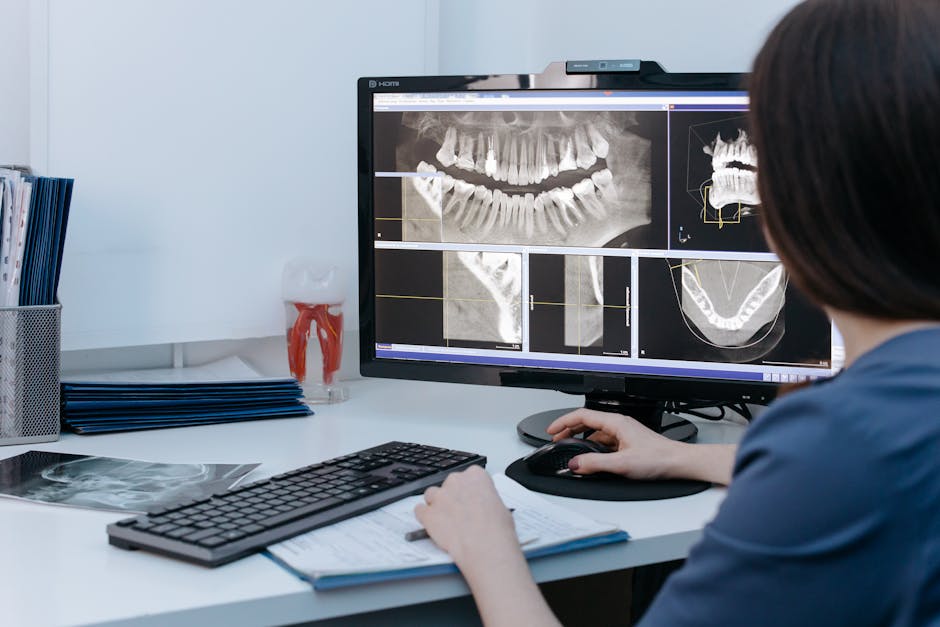
Another structural advantage is the built-in upgrade cycle. Most dental equipment leases run 24 to 60 months, which aligns neatly with the pace of technological change in digital dentistry. When your lease term ends, you can return the equipment and lease the next generation of scanners, milling units, or practice management hardware without the headache of reselling depreciated gear on the secondary market. In a field where software updates can render imaging hardware obsolete within a few years, that flexibility carries real financial value.
Maintenance and service costs often get bundled into lease agreements, which removes the unpredictability of repair bills. If an autoclave fails or a delivery system needs a new circuit board, the leasing company typically covers it under the service contract. For a practice owner who would rather focus on clinical work than equipment troubleshooting, that predictability matters.
The broader market data confirms that this approach is now the norm. According to the Equipment Leasing & Finance Foundation, nearly 80 percent of businesses use financing to acquire equipment or software, and medical equipment is the single most commonly financed category, with 75 percent of acquisitions obtained through loans, lines of credit, or leases. Leasing alone accounts for an estimated 26 percent of medical equipment acquisitions. Dental practices are not outliers here; they are following a well-established pattern across healthcare.
Dental Equipment Leasing vs. Buying: Key Trade-Offs
When Leasing Makes Sense
Leasing is the stronger option when your primary goal is to keep monthly obligations low and predictable. If you are building a new practice or expanding into a second location, cash flow is king, and leasing preserves it. The same holds true if you plan to refresh your technology every two to five years. Digital dentistry moves fast, and owning a scanner that is two software generations behind can put you at a competitive disadvantage. Leasing lets you stay current without the friction of selling old equipment.

There is also a balance sheet consideration. Operating leases, sometimes called true leases or fair market value leases, typically do not appear as a liability on your balance sheet the way a term loan does. That can matter if you plan to apply for a practice acquisition loan or a commercial mortgage in the near future, since lower reported debt improves your debt-to-income ratio in the eyes of a bank underwriter.
When Buying or Financing a Loan Makes Sense
Buying, whether with cash or a term loan, works better when you intend to keep the equipment for seven years or longer and want to build equity in the asset. A dental chair or a delivery system with a long useful life may justify ownership, especially if you have no plans to upgrade in the near term. Strong credit borrowers who can qualify for low-interest term loans may find that the total cost of ownership over a decade is lower than leasing, even after accounting for maintenance.
Ownership also gives you full control. You can customize the equipment, move it between operatories without lease restrictions, or sell it when you eventually upgrade. And while lease payments are tax-deductible, purchasing allows you to take the full Section 179 deduction in the year of acquisition, which can be a powerful tax-planning tool if your practice had a high-revenue year.
The 2026 Tax Advantage: Section 179 and Bonus Depreciation
The tax code continues to favor equipment acquisition in 2026, and the rules apply whether you lease or buy, provided you structure the agreement correctly. The Section 179 deduction limit for 2026 is up to $1,050,000, which means you can deduct 100 percent of qualifying equipment costs in the year you put the equipment into service. That deduction applies to both purchased equipment and certain types of leases.
The key distinction is between a finance lease, also called a capital lease or a dollar buyout lease, and a true lease, also called a fair market value lease. A finance lease is structured so that you effectively own the equipment at the end of the term, usually through a nominal buyout of one dollar. Because the IRS treats this as a purchase for tax purposes, you can claim the full Section 179 deduction on the equipment’s cost in year one. Your monthly payments are still deductible as interest and depreciation, but the upfront write-off is the main attraction.
A true lease, by contrast, keeps ownership with the lessor. You simply make monthly payments and return the equipment at the end of the term or buy it at fair market value. In this case, your lease payments are fully deductible as a business operating expense each year, but you do not get the big upfront Section 179 write-off. The choice between the two structures depends on whether you value the immediate tax deduction or the lower monthly payments and off-balance-sheet treatment more.
Bonus depreciation is another piece of the puzzle, but it is phasing down. In 2026, bonus depreciation sits at 60 percent for qualified property, down from 100 percent in prior years. That means even if you purchase equipment outright, you may not be able to deduct the full cost through bonus depreciation alone, which makes Section 179 planning even more important. A CPA familiar with dental practice taxation can model both scenarios and tell you which structure produces the better after-tax result for your specific situation.
What Equipment Can You Lease for Your Dental Practice?
The range of leasable equipment extends well beyond the operatory. On the clinical side, the most commonly leased items include dental chairs, delivery systems, operatory lights, and handpieces. These are the workhorses of any practice, and leasing them as a package can simplify both budgeting and maintenance.
Imaging and diagnostic equipment represents the largest single category of leasing activity. Intraoral cameras, panoramic X-ray units, CBCT scanners, and digital sensors carry high price tags and evolve quickly, making them ideal candidates for a lease with an upgrade path. Many practices lease their imaging suite and refresh it every three to five years as sensor resolution improves and software platforms update.
Lab and sterilization equipment, including autoclaves, ultrasonic cleaners, and 3D printers for models and surgical guides, also qualify for leasing. These items tend to have shorter useful lives than operatory furniture, so the lease term often aligns well with the replacement cycle.
Beyond clinical gear, practice management infrastructure is fully leasable. Computers, monitors, servers, practice management software licenses, and patient communication systems can all be bundled into a single lease. Some lenders even cover waiting room and office furnishings: reception desks, seating, televisions, and entertainment systems. This broader scope means you can outfit an entire new office under one financing arrangement rather than piecing together multiple funding sources.
Typical Lease Terms, Rates, and Requirements in 2026
Most dental equipment leases run between 24 and 60 months, though some specialized lenders offer terms as long as 15 years for large, multi-operatory buildouts. The shorter the term, the higher the monthly payment, but the sooner you can upgrade. A 36-month lease on a digital scanner gets you back into the market for new technology faster than a 60-month term, though the monthly cost will be higher.
Monthly payments on a lease are generally lower than comparable loan payments because you are paying for the equipment’s use during the term rather than its full purchase price. The trade-off is that you do not build equity, and if you want to own the equipment at the end, you will need to pay the buyout amount specified in your contract.
Credit requirements vary by lender, but most specialized dental financing companies look for at least six months in business and fair to excellent personal credit. While exact score thresholds are rarely published, a FICO score of 650 or above typically qualifies you for standard rates. Borrowers in the 600 to 650 range may still secure approval but should expect higher rates or shorter terms. Startups with less than six months of operating history face a steeper climb, though some lenders will consider them with a larger down payment or a personal guarantee.
Down payment requirements depend on the lender and your credit profile. Many dental-specific financing companies advertise 100 percent financing with no money down, which is a significant advantage over traditional bank loans that often require 10 to 20 percent down. Used equipment financing is also available, though rates tend to run one to three percentage points higher than new equipment rates, and terms are typically shorter, often 12 to 36 months.
How to Compare Dental Equipment Leasing Lenders
Specialized Dental Lenders vs. General Alternative Lenders
The dental equipment financing market splits roughly into three categories. Specialized dental lenders like Henry Schein Financial Services, Patterson Dental, and DLL focus exclusively on healthcare and dental practices. Their underwriters understand dental workflows, reimbursement cycles, and the useful life of specific equipment types. Approvals can come same-day, and these lenders often offer vendor-specific promotional programs. Henry Schein’s Route 66 program, for example, defers payments entirely for the first six months, charges $99 per month for the next six months, and then transitions to level payments for the remainder of the term, a structure designed to let a practice start using the equipment and generating revenue before the full payment obligation kicks in.
General alternative lenders like National Funding and Crest Capital cover a broader range of equipment categories and industries. National Funding has provided over $4.5 billion in funding to more than 75,000 businesses, and Crest Capital maintains dedicated financing pages for niche dental equipment subcategories like air and vacuum systems, dental chairs, and operatory lights. These lenders may offer more flexibility on used equipment or waiting room furnishings, and their funding limits can accommodate large multi-location practices.
Banks and credit unions occupy the third category. They typically offer the lowest interest rates for well-qualified borrowers with strong credit and established banking relationships. The trade-off is slower underwriting, more documentation requirements, and stricter collateral terms. A bank may require a blanket lien on practice assets or a personal guarantee backed by real estate, whereas specialized dental lenders often rely on the equipment itself as collateral.
Red Flags to Watch For
Not all lease offers are created equal. Ask for a total cost of lease disclosure that spells out every fee, including origination charges, documentation fees, and any prepayment penalties. Some contracts include steep penalties for paying off the lease early, which can trap you if you want to upgrade before the term ends.
Pay close attention to the end-of-term buyout clause. A fair market value lease gives the lessor the right to set the purchase price based on what the equipment is worth at that moment, which can be an unpleasant surprise if the equipment holds its value better than expected. A fixed buyout price, even if it results in slightly higher monthly payments, removes that uncertainty.
Promotional offers with low introductory payments deserve scrutiny. A program that starts at $99 per month may balloon to a much higher payment after the introductory period ends. Calculate the total cost over the full term, including the buyout if you plan to keep the equipment, and compare that figure across lenders before making a decision.
Step-by-Step: How to Apply for Dental Equipment Leasing
The application process for dental equipment leasing is straightforward, especially with specialized lenders who have streamlined it for practice owners. Start by getting a detailed equipment quote from your vendor, whether that is a manufacturer representative, a dental supply dealer, or an equipment distributor. The quote should specify the make, model, and total price for each item. Lenders need this to structure the lease.
Next, check your personal credit. A FICO score of 650 or above puts you in a strong position, but knowing your score before you apply prevents surprises. Gather six months of business bank statements and have your practice’s tax returns ready. Some lenders will also ask for a current profit and loss statement.
Choose your lease structure before you submit the application. Decide whether you want a true lease with lower payments and no ownership, or a finance lease with higher payments that leads to ownership and qualifies for the Section 179 deduction. Your CPA can help you model the tax implications of each.
Most specialized lenders offer a one-page online application that generates a same-day pre-approval. Once approved, review the lease agreement carefully. Confirm the term length, monthly payment amount, end-of-term buyout option, and whether maintenance and service are included. If anything is unclear, ask for clarification before signing. After you sign, the lender pays the vendor directly, the equipment is delivered and installed, and your first payment is typically due within 30 days.
Frequently Asked Questions About Dental Equipment Leasing
Is it better to lease or buy dental equipment? The answer depends on your cash flow, your upgrade plans, and your tax strategy. Leasing works better for practices that want lower monthly payments, predictable budgeting, and the ability to upgrade every few years. Buying works better for practices that plan to keep equipment for the long term, want to build equity, and can benefit from the full Section 179 deduction in a single year.
What credit score is needed for dental equipment leasing? Most lenders look for a personal credit score of 650 or higher for standard rates. Some will work with scores in the 600 to 650 range, though rates will be higher and terms may be shorter. Startups with strong personal credit but less than six months in business may still qualify with certain lenders.
Can you finance used dental equipment? Yes, though the terms differ from new equipment financing. Expect shorter terms, typically 12 to 36 months, and interest rates that run one to three percentage points higher. Used equipment leases are less common than new equipment leases, but several national lenders offer them.
How does Section 179 work for leased equipment? If your lease is structured as a finance lease or capital lease, meaning you will own the equipment at the end for a nominal buyout, you can deduct the full cost under Section 179 in the year of acquisition. If you have a true lease or fair market value lease, your monthly payments are deductible as operating expenses instead. The total tax benefit may be similar over time, but the timing differs.
What happens at the end of a dental equipment lease? You typically have three options: return the equipment to the lessor, renew the lease on a month-to-month or extended-term basis, or purchase the equipment. The purchase price is either a fixed dollar amount specified in your contract or the fair market value as determined by the lessor. If you think you might want to keep the equipment, negotiate the buyout terms upfront.
Summary
Dental equipment leasing in 2026 offers a flexible, tax-advantaged path to equipping your practice without draining working capital. The right structure depends on your credit profile, your growth plans, and the type of equipment you need. A finance lease maximizes the Section 179 deduction and leads to ownership, while a true lease keeps payments low and off your balance sheet. The lender landscape ranges from specialized dental financing companies with same-day approvals and deferred payment programs to banks offering lower rates for well-qualified borrowers.
Before you commit, get a detailed equipment quote from your vendor, compare offers from two or three lenders, and ask each for a total cost of lease disclosure that accounts for every fee and the end-of-term buyout. At Liberty Capital Group, we help dental practices navigate these choices, compare leasing options across lender types, and understand the Section 179 implications of each structure, whether you need $20,000 for a single operatory or $500,000 for a full office buildout.