
If you run a printing business, you already know the drill. A major piece of equipment goes down, a client demands faster turnaround with newer technology, or you spot an opportunity to add a service line that your current presses simply cannot handle. Suddenly you are staring at a six-figure price tag and wondering whether writing that check makes sense when payroll is due next week and material costs keep climbing. Printing equipment leasing has become the path more shop owners take to solve exactly this problem, and for reasons that go well beyond just conserving cash. By the time you finish reading, you will understand how leasing works, what it actually costs, what your options are if your credit history is not spotless, and how to decide whether leasing fits your shop's plans for 2026.
Table of Contents
- Why Printing Business Owners Are Choosing Leasing Over Buying
- How Printing Equipment Leasing Actually Works (Step by Step)
- What Printing Equipment Can Be Leased?
- How Much Does Printing Equipment Leasing Cost?
- Credit Requirements for Printing Equipment Leasing
- Benefits of Leasing vs. Buying Printing Equipment
- Is the Printing Industry Profitable Enough to Justify Leasing?
- Common Questions About Printing Equipment Leasing
- Next Steps: How to Get Started with Printing Equipment Leasing
Why Printing Business Owners Are Choosing Leasing Over Buying
Walk into any successful print shop and you will find the owner thinks about capital the same way a press operator thinks about ink coverage: waste as little as possible. Dropping fifty thousand dollars, or far more, on a single piece of equipment drains reserves that could cover three months of payroll, a bulk paper order at a discount, or the marketing push that lands three new commercial accounts.
Leasing flips that equation. Instead of one large capital outlay, you commit to fixed monthly payments that are predictable and often fully tax-deductible as a business operating expense. Talk to your CPA about Section 179 implications, but many shop owners find the tax treatment alone makes leasing worth a serious look.
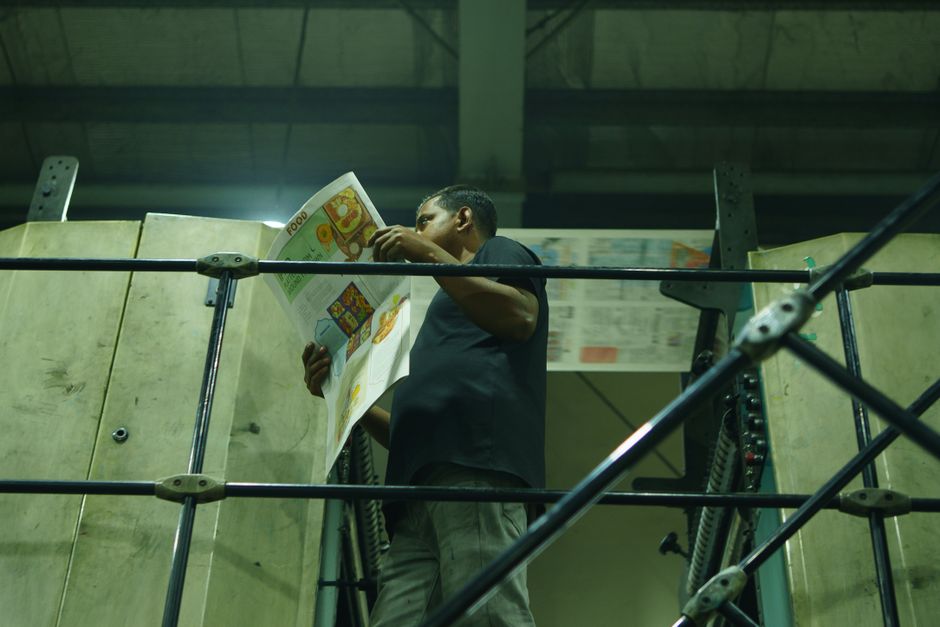
Technology does not stand still in this industry. The digital press that was state-of-the-art three years ago may already lag behind what your competitors are running. Leasing lets you upgrade to newer digital presses, wide-format printers, or finishing equipment on a cycle that matches technology timelines rather than depreciation schedules. You are not stuck trying to sell outdated gear just to fund its replacement.
For businesses with less than fifty million in sales, leasing also preserves bank credit lines for other needs. Your working capital stays available for seasonal inventory builds, emergency repairs on other equipment, or the kind of growth opportunity that will not wait for a loan committee to meet.
How Printing Equipment Leasing Actually Works (Step by Step)
The process is simpler than most first-time lessees expect, but understanding each step removes the uncertainty that keeps owners from moving forward.
Step one is the application. You provide basic information about your business: how long you have been operating, monthly revenue, and specifics about the equipment you need. Many funding marketplaces structure this as a no-obligation step with a soft credit pull that does not impact your score. You are exploring options, not signing anything.
Step two is approval. Qualified applicants can receive decisions within twenty-four to forty-eight hours. Some programs offer same-day approvals for equipment under certain thresholds. The speed depends on how complete your financial picture is when you apply, so having your documentation ready makes a real difference.
Step three covers equipment selection. You choose the specific printer, press, plotter, or finishing equipment from a vendor or dealer of your choice. The lender pays the vendor directly. You never handle the purchase transaction yourself, which keeps the process clean and simple.

Step four establishes your payment structure. Fixed monthly payments run over a lease term that typically spans twenty-four to sixty months. Your exact terms depend on the equipment cost, your business credit profile, and the lease type you select. More on those lease types in a moment.
Step five is what happens at the end of the term. You will generally have three paths: purchase the equipment at its fair market value, exercise a dollar buyout option if your lease was structured that way, trade up to newer equipment, or simply return it and walk away. The right choice depends on whether the equipment still serves your needs and what technology has emerged since you started the lease.
Common Lease Structures for Printing Equipment
The lease structure you choose shapes everything from your monthly payment to what happens when the term ends. A Fair Market Value lease, often called an FMV lease, carries lower monthly payments. At the end of the term, you return the equipment or buy it at its current market value. This structure works well for shops that want to cycle into newer technology every few years without owning depreciating assets.
A dollar buyout lease charges higher monthly payments but transfers ownership to you for one dollar at the end of the term. Choose this when you plan to keep the equipment long-term and want to build equity in the asset. It functions much like a loan but preserves the tax and cash flow advantages of leasing.
A purchase option lease gives you the right, but not the obligation, to buy the equipment at a predetermined price during or after the lease term. This flexibility proves valuable when your business needs might shift and you want to keep your options open.
The distinction between operating leases and capital leases matters for your balance sheet. Operating leases typically keep the equipment off your books as a liability, which some owners prefer for accounting purposes. Capital leases function more like a loan with ownership transfer and appear differently on financial statements. Your accountant can advise which treatment benefits your specific situation.
What Printing Equipment Can Be Leased?
The range of equipment available through leasing programs covers virtually everything a modern print shop runs. Digital printers and production presses, whether sheet-fed, web-fed, or hybrid models, represent the most commonly leased category. Wide-format and large-format inkjet printers for banners, signage, and displays follow closely behind as shops expand into high-margin visual communications work.
Screen printing operations can lease complete setups: presses, exposure units, and conveyor dryers. Flexographic and label printing machinery for packaging and specialty work qualifies under the same programs. Finishing equipment rounds out the production floor: cutters, folders, binders, collators, and laminators all fall within standard leasing parameters.
Plotters, heat presses, and packaging equipment serve diversified shops that handle multiple product categories under one roof. If your shop handles distribution and needs delivery vehicles, commercial truck financing operates through a parallel process, separate from equipment leasing but often available through the same funding relationship.
How Much Does Printing Equipment Leasing Cost?
Real numbers help more than generalities, so here is what the market looks like in 2026. Basic office-grade printer leases start around ninety-nine dollars per month for entry-level models. That is the floor. Premium high-output digital presses and production equipment typically range from three hundred fifty dollars to several thousand dollars per month, depending on output volume, speed, and feature sets.
Equipment costing over one hundred fifty thousand dollars enters a segment where many traditional banks hesitate to participate. Specialized commercial finance companies step into this gap with high-value equipment leasing programs designed specifically for production-level machinery. If your shop needs a press in this range, you will want to work with a funding source that understands the segment rather than one that treats it as an awkward exception.
Your monthly payment depends on several variables: the equipment cost itself, the lease type you select, the term length, your business credit profile, and whether maintenance and toner are bundled into the agreement. Two shops leasing identical equipment can have meaningfully different payments based on these factors. The most practical next step is to apply or call for a free business loan consultation. You can get preapproved and receive a no credit check quote that reflects your actual situation rather than industry averages that may not apply to your shop.
Credit Requirements for Printing Equipment Leasing
Traditional lenders typically want to see established businesses with two or more years of operating history and strong revenue trends. That describes plenty of print shops, but it certainly does not describe all of them, especially newer operations or those that weathered a rough patch.
Many commercial finance companies offer programs for businesses that fall outside traditional credit boxes, particularly when the equipment itself serves as collateral for the lease. The logic is straightforward: a production press has tangible value that reduces lender risk, which opens doors that might otherwise stay closed.
Lenders evaluate several factors beyond a credit score. Time in business matters. Monthly revenue consistency matters. Your industry experience, the overall financial health of the company, and the specific equipment you are acquiring all factor into the decision. Some programs offer no credit check quotes as part of the initial consultation, which lets you explore options without any impact on your credit profile.
Even if your credit history includes challenges, equipment leasing may still be accessible. The key is working with a funding marketplace that evaluates your whole business picture rather than running your application through an automated scoring model and rejecting it at the first screen. A conversation about your situation costs nothing and can surface options you did not know existed.
Benefits of Leasing vs. Buying Printing Equipment
The cash flow argument alone convinces many owners. Keeping twenty thousand to two hundred thousand dollars in your business bank account instead of sending it to an equipment vendor means you can handle whatever comes next, whether that is an unexpected slow season, a large material purchase at favorable pricing, or an opportunity to bid on a contract that requires upfront investment.
Technology upgrades become routine rather than traumatic. Printing technology advances quickly, and leasing lets you cycle into newer equipment every three to five years without the hassle of selling old gear in a thin secondary market. You simply return the equipment at lease end and step into the next generation.
Tax treatment favors leasing for many businesses. Lease payments are typically one hundred percent tax-deductible as a business expense in the year they are paid, unlike depreciation schedules on purchased equipment that spread the deduction over multiple years. The difference in after-tax cash flow can be substantial.
Predictable budgeting simplifies financial planning. Fixed monthly payments eliminate the uncertainty of lump-sum capital expenditures and make it easier to model profitability on new service lines. You know exactly what the equipment costs each month, which lets you price jobs with confidence.
Preserving credit lines matters more than most owners realize until they need those lines. By leasing equipment, you keep your bank lines of credit and working capital loans available for payroll, inventory, emergencies, or the kind of growth opportunity that cannot wait for a separate financing process.
Is the Printing Industry Profitable Enough to Justify Leasing?
Printing businesses can be highly profitable when managed with attention to equipment efficiency, material costs, and client mix. The shops that struggle tend to be those running outdated equipment that requires constant maintenance, produces inconsistent quality, and limits the types of jobs they can accept.
Leasing actually improves profitability by reducing fixed asset costs and freeing capital for sales, marketing, and customer acquisition. The relevant metric is not whether you can afford the equipment. It is whether the equipment generates enough revenue to cover the lease payment plus a healthy margin. Run that calculation on a new wide-format printer or digital press and the answer often surprises owners who have been limping along with older gear.
Many print shop owners discover that leasing higher-capacity or more versatile equipment opens revenue streams that were not accessible before. Wide-format signage, short-run packaging, and variable-data digital printing are three examples of services that require specific equipment capabilities. Leasing lets you add those capabilities without betting the entire shop on a single purchase decision.
If you are unsure about your shop's numbers, a free business loan consultation can help you model different scenarios and determine what monthly payment your cash flow can comfortably support. The math either works or it does not, and knowing which side you are on beats guessing.
Why Leasing Printing Equipment Makes Financial Sense
Leasing isn’t just a way to get equipment when cash is tight. For most print shops, it’s the smarter financial move. Here’s why:
- Cash flow management. Leasing needs a low capital outlay compared to an outright purchase. Instead of writing one large check, you spread the cost over the equipment’s working life and keep your working capital free for payroll, inventory, marketing and growth.
- Inflation buster. Equipment prices keep climbing. A lease locks in today’s price with a fixed payment, and you pay it back with tomorrow’s dollars. Waiting a year to save up often means paying more for the same equipment.
- Low, manageable payments. Fixed monthly payments make budgeting predictable and can be structured to match how your revenue comes in.
- Terms up to 5 years, most with a $1 buyout. At the end of the term you own the equipment for a dollar. There are no surprise balloon payments and no fight over “fair market value.”
- Section 179 and 100% bonus depreciation. A $1 buyout lease is generally treated as a purchase for tax purposes, so qualifying equipment may be eligible for the Section 179 deduction (up to $2.56 million for 2026) or 100% bonus depreciation. You could write off the full cost in the year the equipment is put in service while paying for it monthly. Confirm with your CPA how this applies to your business.
- Conserve cash. Keep your reserves and bank credit lines open for opportunities and emergencies instead of tying them up in equipment.
Common Questions About Printing Equipment Leasing
Is leasing a printer a good idea for my business?
For most print shops, the answer is yes, particularly if you value cash flow flexibility, want access to current technology, or prefer predictable monthly expenses over large capital outlays. The best lease structure depends on your intentions. If you plan to keep equipment long-term, a dollar buyout lease makes sense. If you expect to upgrade frequently as technology evolves, an FMV lease typically works better. Neither is universally right; the right choice reflects your business strategy.
How fast can I get approved for printing equipment financing?
Some lenders can approve and fund equipment leases in as fast as one day for qualified applicants. The process moves quickly when you have your business financials organized and work with a funding marketplace that matches you to the right lender on the first attempt rather than shopping your application around. Having your last few months of bank statements, revenue records, and equipment quote ready before you apply accelerates everything.
What if I have bad credit or a new business?
Options exist for businesses with limited credit history or past credit challenges, especially when the equipment itself serves as collateral. The underwriting logic shifts from your credit score alone to the value of the asset and your demonstrated ability to generate revenue with it. The most productive approach is to apply or call for a no credit check quote to see what programs are available for your specific situation. You may find that the options are broader than you assumed.
Next Steps: How to Get Started with Printing Equipment Leasing
Contact Liberty Capital Group for a free business loan consultation. There is no obligation and no pressure, just a conversation about your equipment needs and where you want to take your shop. Be ready to discuss what equipment you need, its estimated cost, how long you have been in business, and your monthly revenue.
You can apply or call to get preapproved. The process is designed for busy business owners who do not have time for lengthy paperwork and weeks of waiting. Even if you are only exploring options at this stage, a no credit check quote gives you the real numbers you need to make an informed decision.
With over twenty years in commercial finance, Liberty Capital helps printing businesses across the United States find the right funding solution, whether that means equipment leasing, working capital, or a combination of programs structured around how your shop actually operates.
Ready to compare your options? Liberty Capital Group has placed commercial equipment financing since 2004. One application is shopped across multiple lease and loan sources, so you see the true cost of each option before you sign.